
Flipper Zero RFID/NFC Cloning: Read, Write & Copy Cards Easily! – NFC Magic
ALIEXPRESS CUPOM
**TITLE**
Flipper Zero RFID Cloning Mastery: A 2024 Guide to Reading, Writing & Copying NFC Cards Responsibly
Flipper Zero RFID cloning
Introduction: Why Everyone Is Talking About Flipper Zero
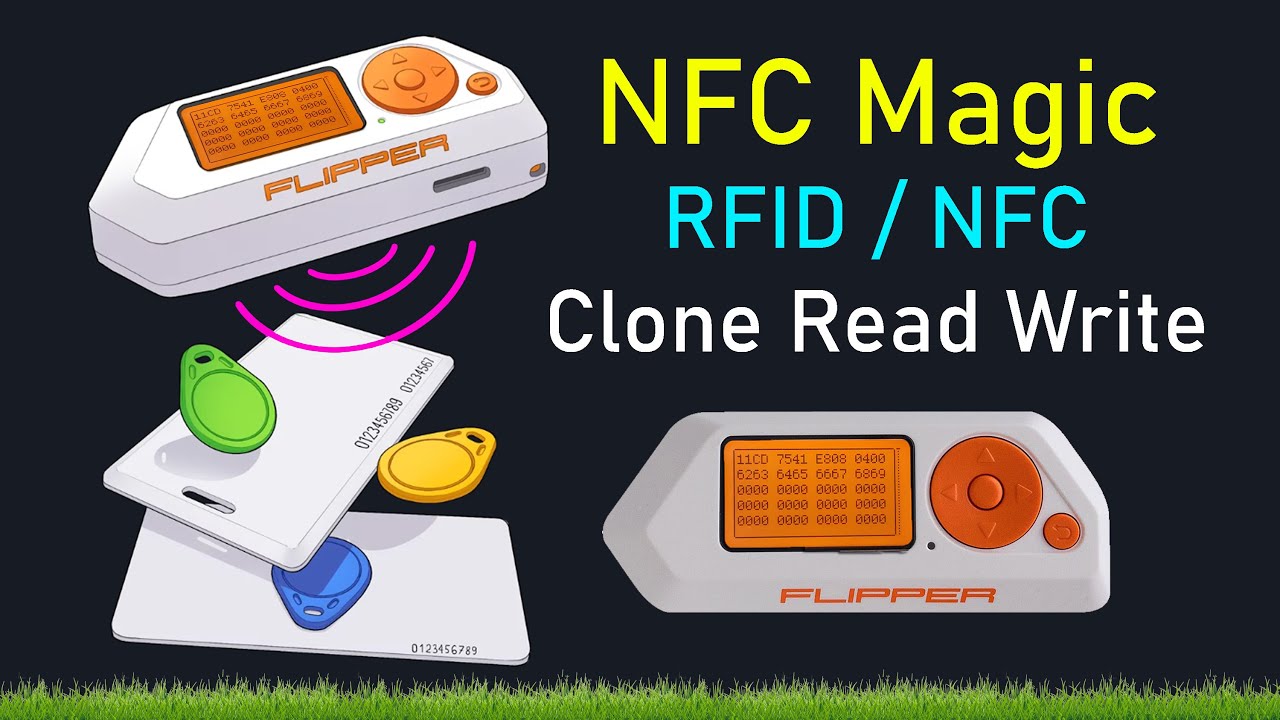
Flipper Zero RFID cloning has become one of the hottest sub-topics in hardware hacking. In less than four minutes, the YouTube tutorial by Yellow Purple demonstrates how a pocket-sized, dolphin-themed gadget can read, write, and copy low-frequency (125 kHz) and high-frequency (13.56 MHz) cards in seconds. That tiny demo sparks a big realization: with affordable hardware, almost anyone can audit physical security or, if unaware of the law, cross an ethical line. In this 2 000-2 500-word article you will learn the radio-frequency basics, see how to reproduce the video’s workflow step by step, compare Flipper Zero to rival tools, and discover professional tips for staying on the right side of cybersecurity legislation. By the end, you will not only know how cloning works but also why context, consent, and continuous learning are vital when wielding RFID power.
Key Promise: This guide blends hands-on technique with defensive insights so that makers, pentesters, and facility managers can all collaborate on safer, smarter access-control systems.
1. Understanding RFID & NFC Fundamentals
What Exactly Is RFID?
Radio-Frequency Identification (RFID) uses electromagnetic fields to transfer data between a reader and a tag. In physical security, low-frequency 125 kHz systems such as EM4100 or HID Prox are ubiquitous. They transmit an unencrypted ID number; hence, cloning simply means copying that ID into another compatible tag.
Near-Field Communication: Same Family, Different DNA
NFC operates at 13.56 MHz, adds two-way peer-to-peer capability, and often employs cryptographic challenge-response. Popular card types include MIFARE Classic (which uses the decades-old Crypto-1 cipher) and MIFARE Ultralight/C (which can implement modern AES). Although NFC is “smarter,” poor key management still leaves gaps.
Did You Know? A 2019 research paper from Ruhr-University Bochum showed that 80 % of tested MIFARE Classic deployments still used factory-default keys, making them trivially clonable with hobbyist gear.
Flipper Zero contains both LF and HF antennas, enabling seamless toggling between these protocols through a friendly interface—a major reason the video could showcase success in under five clicks.
2. Meet the Flipper Zero: A Swiss-Army Knife for Radio Tinkerers
Hardware Inside the Dolphin
Weighing 102 g, Flipper Zero packs an STM32 microcontroller, sub-1 GHz transceiver, infrared module, Bluetooth LE, GPIO pins and a monochrome LCD. The side of the enclosure hides a spring-loaded GPIO header compatible with 3 V-logic expansion boards, allowing you to attach CC1101 or Wi-Fi dev modules sold through the affiliate links in the video description.
Firmware Ecosystem: Official vs. Community Builds
The official firmware focuses on legal functions—reading, writing, and saving card dumps. Community builds like Unleashed or RogueMaster unlock extended range hacking, additional brute-force scripts, and even gameboy emulation. Whichever branch you flash, the core NFC menu remains stable: “Read”, “Write”, “Emulate”, and “Save.”
Upgrade Tip: Flipper’s DFU bootloader can’t be bricked easily. If a new custom firmware acts up, hold Back + Left buttons on startup to revert to safe-update mode.
3. Setting Up Your Lab: Tools, Cards & Legal Boundaries
Mandatory Gear Checklist
- 1× Flipper Zero (retail ≈ $169 or cheaper via AliExpress links).
- 1–2 blank Magic 1K or Magic Gen2 cards whose UID blocks are rewritable.
- Original access card or NFC tag to clone.
- USB-C cable and desktop Flipper application (for backing up dumps).
- (Optional) External antenna to extend LF range to ~4 cm for tough badges.
Ethical & Legal Considerations
In most jurisdictions cloning without explicit owner consent breaches anti-fraud or trespassing laws. Always secure a signed authorization letter when testing corporate premises. Furthermore, PCI-DSS and ISO 27001 audits consider unauthorized badge duplication a “critical finding,” so your legitimate test report can save a company fines and reputation damage.
“Hardware hacking isn’t inherently illegal—intent and authorization determine the difference between research and crime.”
– Dr. Jessica Payne, Principal Security Researcher, 2023 Black Hat keynote
4. The Step-by-Step Cloning Workflow
Reading the Original Card
Power on Flipper Zero, navigate to NFC → Read, and hold the badge flat against the dolphin icon. Within 0.5 s the screen shows card type (e.g., MIFARE Classic 1K) and a hex UID like 04:A3:56:9C:88. Press Save to store a .nfc dump on internal memory.
Writing to a Magic Card
Insert a rewritable Magic 1K card. Choose Write, select the saved dump, and confirm. Magic cards’ sector 0 is unlocked, allowing UID rewriting—unlike genuine NXP chips. The process takes under three seconds.
Verifying the Clone
- Use NFC → Emulate to act as the card and test access without burning a physical copy.
- Scan the Magic card with a smartphone using an NFC reader app. If the UID matches, you’re set.
- Optionally export the dump via the desktop companion and compute SHA-256 to ensure no bit-flip errors.
Quick Fix: UID still not recognized? Ensure the facility reader is not employing “anti-clone” look-up tables. Many enterprise systems compare both UID and card CSN (chip serial number) read over RS485; if mismatched, access fails.
5. Practical Use-Cases & Security Implications
Legitimate Scenarios: From Academics to Blue-Teamers
Universities often give cybersecurity students lab cards to practise cloning, while red-team consultants demonstrate physical intrusion during social-engineering engagements. Another common scenario: duplicating personal gym tags so family members don’t need to pay extra issuance fees (with facility approval, of course).
Risks of Malicious Cloning
Attackers can tailgate employees, skim their badges in elevators, then copy the credential onto a Magic card and return at off-hours. Because many legacy readers don’t log UID usage, forensic teams may have no entry trail, giving adversaries silent persistence.
| Tool | Primary Strength | Key Limitation |
|---|---|---|
| Flipper Zero | Multi-protocol, pocket size, GUI driven | Antenna range (~2 cm) without mods |
| Proxmark3 RDV4 | Raw signal analysis & custom scripts | Higher cost, steeper CLI learning curve |
| Android NFC Phone + MCT App | Convenience, no extra hardware | No LF support; modern Android blocks UID spoofing |
| ChameleonTiny Pro | Live sniffing + on-device UID switch | Dedicated to 13.56 MHz only |
| Handheld HID Copier | Instant LF clone & replay | Single-purpose, limited firmware updates |
6. Troubleshooting & Best Practices
Common Pitfalls
- Incorrect Card Type: Trying to write a Classic dump to an Ultralight card fails silently.
- Battery Drain: LF brute-force loops consume ~130 mA; keep the Li-Po charged.
- RF Noise: Metal turnstiles detune antennas. Stand at least 10 cm back during capture.
- Firmware Mismatch: A newer desktop utility may not recognize older dumps. Pair updates.
- Magic Card Lockout: Some cheap blanks lock after three failed writes. Buy genuine NTAG 215-based Magic cards.
- Anti-Tamper Readers: High-end controllers perform mutual authentication with SAM modules, defeating simple UID clones.
- Legal Oversight: Forgetting to obtain written permission can void insurance coverage during a pentest.
Best Practice Cheat-Sheet
- Back up every original dump twice—local SSD and encrypted cloud.
- Label cloned cards with color markers to avoid mixing with legitimate keys.
- Use Faraday pouches when transporting flipper and badges to prevent skimming.
- Document firmware version and card type in your audit report for repeatability.
- Regularly factory-reset Flipper Zero to purge sensitive credentials.
Pro Tip: For tough LF badges, attach the external “Cowbell” antenna to GPIO 4-5; field strength increases by ~2.8 dB, expanding read distance to 4–5 cm.
7. Future Trends in RFID Security & Open-Source Tooling
Stronger Protocols on the Horizon
NXP’s MIFARE DESFire EV3 integrates 3DES/AES-128 with randomized UID rotation, rendering simple cloning obsolete. Likewise, HID’s Seos platform employs mutual authentication leveraging PKI certificates. Facilities upgrading today will dramatically reduce broadcast-ID attacks tomorrow.
The Role of Open-Source Communities
Projects like Flipper, Proxmark, and ChameleonTiny accelerate responsible disclosure. When volunteers find an exploit, manufacturers push patches faster. Expect community firmware to adopt DESFire sniffing and advanced crypto-analysis modules once academic teams publish feasible side-channel attack vectors.
Industry Insight: Gartner forecasts the market share of legacy 125 kHz systems will drop from 38 % in 2023 to just 12 % by 2027, driven by risk assessments highlighting UID-only vulnerabilities.
Frequently Asked Questions
1. Can Flipper Zero clone hotel key cards?
Most modern hotel chains use MIFARE Ultralight EV1 or DESFire with encrypted sectors and rolling keys. Flipper Zero can read the UID, but without the secret keys writing a functional clone is practically impossible and legally questionable.
2. Is range an issue when scanning badges discreetly?
Yes. The built-in antenna needs close proximity (0–2 cm). However, attaching an external coil or using the “Rabbit” LF booster can extend that to 5 cm, enough for covert scanning in crowds—another reason ethical guidelines matter.
3. Do Magic cards trigger security system alarms?
Rarely. Anti-clone readers look for manufacturer codes or cryptographic challenges, not the mere presence of a Magic chip. Still, enterprise environments with Secure Channel Protocol (SCP) will block them.
4. How do I protect my organization against cloning?
Implement multifactor entry: require PIN pads or biometric confirmation in addition to RFID. Migrate to DESFire EV3 or mobile credential apps that use secure BLE/NFC tokens with rotating IDs.
5. Is it possible to emulate a card indefinitely on Flipper Zero?
Yes, but power-saving measures kick in after roughly 30 minutes. Keep the device plugged into a power bank for prolonged emulation, and remember that some readers perform “presence checks” that handheld emulation may fail.
6. What file format does Flipper use for dumps?
Card dumps are stored as .nfc or .sub (for Sub-GHz captures). They are simple JSON-like structures that community tools can parse and convert.
7. Will flashing custom firmware void my warranty?
Officially yes, but the bootloader allows restoration to stock, making detection unlikely unless you brick the hardware—a rare event.
8. Can smartphones replace Flipper Zero entirely?
Not yet. Android will not spoof LF badges, and iOS severely restricts raw NFC access. Flipper’s dedicated RF hardware and GPIO expandability remain unmatched by mobile devices in 2024.
Conclusion: Clone Smarter, Defend Better
From foundational radio theory through hands-on cloning in three taps, Flipper Zero proves that accessibility no longer means sacrificing capability. You learned:
- RFID vs. NFC differences and why legacy 125 kHz systems remain vulnerable.
- How Flipper Zero’s friendly UI and multi-antenna design streamline cloning.
- A seven-step workflow for reading, writing, and validating Magic card duplicates.
- Ways to mitigate cloning threats with multifactor and modern cryptographic credentials.
- Forward-looking trends, including DESFire EV3 adoption and open-source tool evolution.
The next step? Test your own environment—with permission—and share findings to improve collective security. If you found this article valuable, watch the embedded video again, subscribe to Yellow Purple, and join the Flipper community forums. Responsible knowledge sharing today builds resilient systems tomorrow.
Credits: “Flipper Zero RFID/NFC Cloning: Read, Write & Copy Cards Easily! – NFC Magic” by Yellow Purple, YouTube, 2024.
Related Post

AliExpress discounts that help during inflation
ALIEXPRESS CUPOM PROMO CODE https://aliexpressreview.com/svgaxv ALIEXPRESS 15$ OFF https://aliexpressreview.com/svgaxv CUPOM WHERE https://aliexpressreview.com/svgaxv AliExpress Discounts That [...]
AliExpress discounts that deliver consistently
ALIEXPRESS CUPOM PROMO CODE https://aliexpressreview.com/svgaxv ALIEXPRESS 15$ OFF https://aliexpressreview.com/svgaxv CUPOM WHERE https://aliexpressreview.com/svgaxv “`html AliExpress has [...]